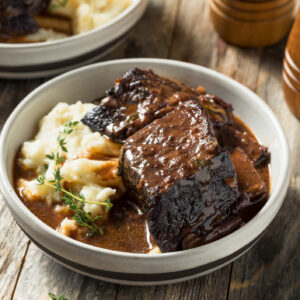
Call it stew or call it a pot roast. Either way, the method used to cook this delicious entrée is called braising, and it’s one of the most popular and flavorful choices for family meals throughout the fall and winter months
It’s a simple cooking method that has been around for centuries, adapted by many cultures to prepare some of their most famous dishes, including Beef Burgundy (Bourguignonne) in France, Irish Stew, Carne Guisada in Spain and the Caribbean, and Birria in Mexico, just to name a few.
One thing they all have in common is that each recipe uses the “less tender” cuts of meat and tenderizes them by cooking with long, slow, moist heat. Often, a broth and vegetables are added for additional color, flavor, and texture.
So, what is the difference between a stew and a pot roast?
The distinction between a stew and a pot roast is pretty blurred.
About the only “real” differences between these 2 dishes are that a stew uses smaller pieces of meat (usually 1 to 2 inches) versus a pot roast, which uses a larger, 1 to 3 pound (or more) whole piece of meat, which is then, after cooking, either sliced or pulled apart.
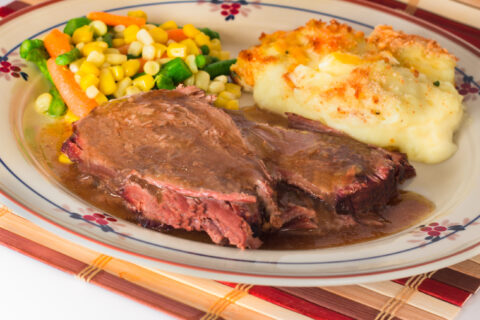
Sliced Pot Roast
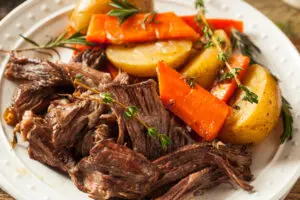
Pulled Pot Roast
The other difference is that stews generally use quite a bit more liquid, resulting in a finished dish that’s pretty much like a hearty soup.
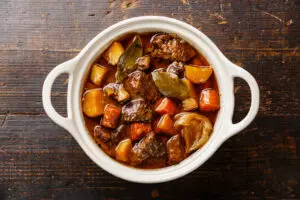
Stew
Whichever variation you prefer, the basic outcome is that this long, slow, moist cooking method slowly breaks down the connective tissues and collagen in the meat, resulting not only in a tender dish, but a delicious broth which you can then thicken at the end.
A poor man’s meal? Not at all!
While stews and pot roasts were often thought of as a “working class” meal, this cooking method has been resurrected by some of the world’s most famous Chefs and have appeared on their very expensive menus to absolute rave reviews. What’s good, is just plain good.
The braising basics.
Actually, the braising technique is easy, but the success of the final dish depends on a few important factors, the most important being the cut of meat you start with.
The most commonly braised meats are beef, but veal, pork, and lamb also have delicious recipes made from shank (veal), shoulder (pork), and leg or shank (lamb).
As for beef, the most popular cuts for braising come from the chuck, bottom round, brisket, flank, short ribs, and shank.

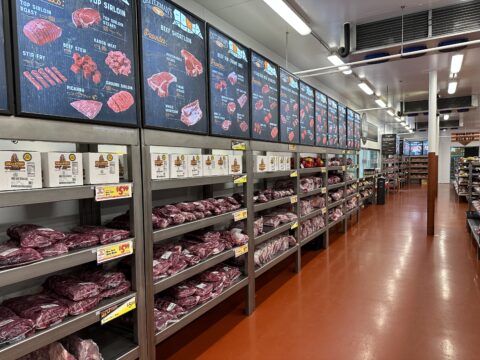
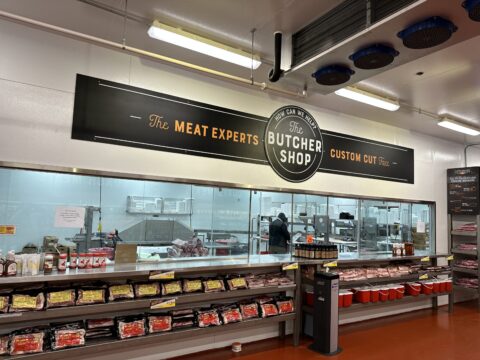
If you’re unsure of just which cut of meat might best suit your recipe and you are in the meat locker room at Cattleman’s, you have 3 additional ways to know exactly which cut of meat to buy.
- Each package of meat tells you what cut it is, and as mentioned above, the most popular choices for braising come from the Chuck, Bottom Round, Brisket, Flank, Short Rib and Shank. Just look for that on the label.
- We have large, wall-mounted posters that show you photos of each cut of meat and which cooking method it’s best suited for. They are an excellent guide.

- Ask any one of our butchers or attendants in the meat room. They would be more than happy to “steer” you in the right direction.
Having said this, many people are surprised that the worst cuts of meat for braising are actually the most expensive and tender ones.
Cuts such as the rib, loin & tenderloin are very poor choices for braising. Why?
First, they’re already tender, so there’s no reason to braise them. Second, their muscle fibers are so fine that braising would only turn them into a shredded “beef spaghetti.” Lastly, quite honestly, the less tender cuts have a lot more flavor.
One of the most popular cuts of beef for braising is short ribs—ones that are both meaty and well marbled, with even specks of fat throughout the meat.
What is the best “recipe”?
There are so many recipes used in braising that we could go on forever, with recipes that even use wine, beer, sake, cider, tomato puree, and fruit juices such as pineapple and cherry. They’re all excellent in their own right.
Today, we’d like to share with you a braised beef recipe that’s one of our favorites.
Honey & Soy Braised Beef Short Ribs
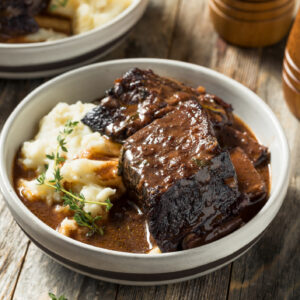
You may like it SO much that you’ll be tempted to make a large batch of this recipe and freeze (yes, freeze) portions of the braised beef, together with some of the sauce, so I can enjoy it more often.
What makes memorable short ribs?
Here are some criteria:
- Choose the right short ribs. Meaty but with great specks of fat marbling throughout. Not too fatty, not too much bone.
- Ideally, cut about 2” thick.
- Seared in hot oil on all sides until well caramelized to develop good color and flavor.
- Cooked in a VERY flavorful liquid, whether stock, wine, or other. More about that later.
- Cooked VERY slowly (basically poached) over a long period of time (3 hours minimum) until the meat is falling off the bone tender, but not entirely “bleached” of all of its fat and natural beef flavor.
- Served with a sauce (made from the cooking liquid) that’s not too thick and seasoned just ever so slightly. It should be medium-dark in color, and almost “sticky” to the lips, coming from the gelatin that’s naturally in the rib bones. And lastly, so savory that you’ll enjoy it as much as the ribs themselves.
If you follow these basic guidelines, it will result in ribs that are neither dry, stringy, nor chewy.
Contrary to the usual rule of thumb that less tender cuts of meat are less expensive, pound for pound, short ribs (once braised and removed from the bone) are actually more expensive to make than beef tenderloin. That alone will definitely change your notion of short ribs being a poor man’s meal!
Before you make this recipe, keep in mind that you should have a heavy-gauge saucepot to sear and then cook your beef short ribs in. It should also have a lid.
Second, while you can use a pressure cooker to shorten the cooking time, we prefer the longer, slower method of braising in a covered pot rather than using a pressure cooker. This will develop more flavor in the sauce and maintain the integrity of the meat shapes.
Finally, our recipe for Honey & Soy Braised Short Ribs is on the Cattleman’s website’s recipe page but you can also use this quick link here: Honey & Soy Braised Short Ribs.
Enjoy!